
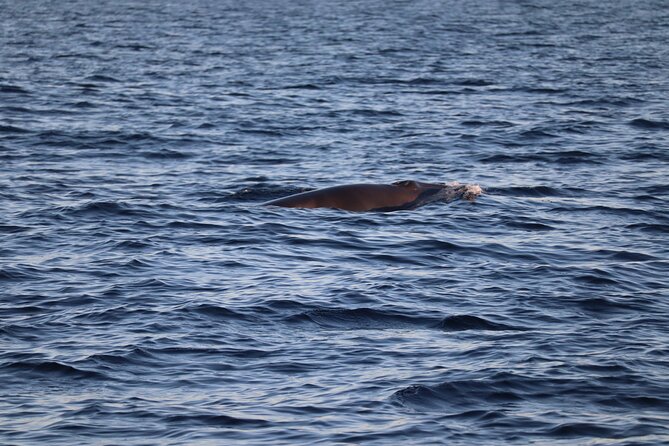
Reviewed · ALGARVE DOLPHIN WATCHING TOURS
Sunset Dolphin Watching with Marine Biologists
Golden hour turns Faro into a water-level movie set. This 2.5-hour sunset cruise heads out from Faro in search of dolphins, whales, and other marine wildlife, with marine biologists guiding the hunt as the light turns soft and magical. You’ll cruise through the Ria Formosa Natural Park area first, then move closer to the ocean for the main spotting window.
Two things I really like: the onboard briefing and rules before you start looking, and the way the biologists turn sightings into real learning. In particular, the guides Pedro and Diego are repeatedly called out as friendly, attentive, and good at making sure everyone is taken care of, not just watching from the side.
One thing to consider is that this is weather-dependent. If conditions are poor, you’ll be offered a different date or a full refund, but you should still plan for the fact that nature is running the schedule.
In This Review
- Key Highlights You’ll Care About
- Faro’s Ria Formosa to Open Water, Right Before Sunset
- Price and What You Get for $78.31
- The Onboard Briefing: How the Biologists Set Expectations
- Cruising Ria Formosa First: A Setup for Better Spotting
- The Main Hunt: Dolphins, Sharks, and Seabirds at Sunset
- What It Means That Marine Biologists Are Gathering Data
- Included vs Not Included: The Stuff That Keeps You Comfortable
- Private Tour Format: Your Group, Your Pace
- Duration and Timing: How to Plan Your Evening
- Who Should Book This Sunset Dolphin Watching
- Should You Book This Dolphin and Whale Watch?
- FAQ
- What is the duration of the Sunset Dolphin Watching tour?
- How much does it cost, and is it in English?
- What’s included and what should I bring?
- Where do I meet, and where does it end?
- What marine wildlife might I see?
- What happens if the weather is poor?
Key Highlights You’ll Care About
- Marine biologists on board who focus on spotting and explaining what you’re seeing
- Sunset timing that makes dolphin and whale sightings feel extra cinematic
- A clear onboard briefing with rules before you enter the main wildlife search window
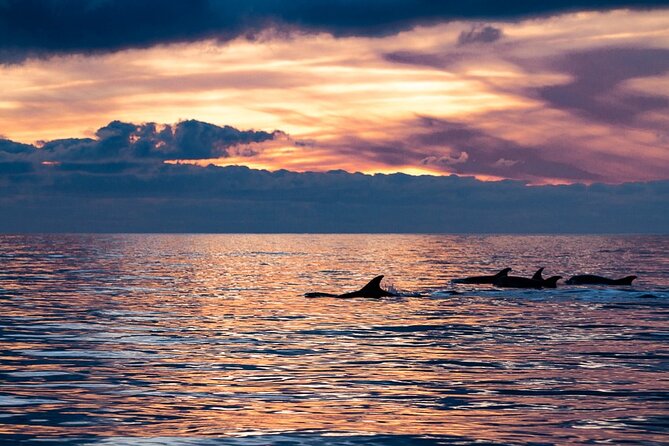
- Priority species range from common and bottlenose dolphins to striped dolphins, plus possible sharks and seabirds
- Scientific data gathering that adds purpose beyond sightseeing
Faro’s Ria Formosa to Open Water, Right Before Sunset
This is the kind of trip that works because the timing is built in. You’re not just going out onto the water, you’re going out as the sun starts to fall. That change in light matters. Dolphins and other wildlife tend to look more active near these calmer, late-day conditions, and the sky behind them gives every sighting a real wow factor.
The cruise also starts with the Ria Formosa Natural Park context. You’ll have an onboard briefing and then you’ll cruise through the park area before you hit the ocean. That matters for two reasons. First, you get a heads-up on how the activity works and what the team expects from passengers. Second, the move from park waterways to more open ocean gives you a better shot at the variety of species mentioned for this tour.
If you’re traveling from the city side, the meeting point is in Faro at Ocean Vibes Algarve Ocean Emotions, Passeio Abu Sào Ibn Harune Loja B, 8000-541 Faro, Portugal. It’s also near public transportation, which helps if you do not want to fight parking or taxis right at the end of the day.
Other sailings for the last of the light:

Price and What You Get for $78.31
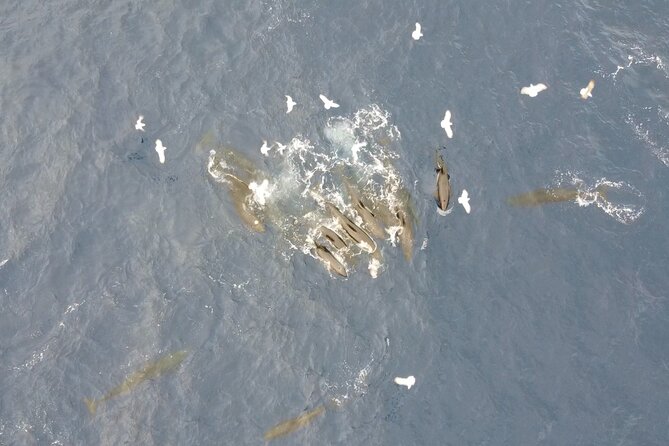
At $78.31 per person for roughly 2 hours 30 minutes, this sits in the mid-range for a professional wildlife boat outing. The value comes from a few specific things that you actually feel on the water: marine biologists leading the spotting, an educational approach, and the fact that life jackets are included.
What’s not included is equally useful to know. Wind coats and water are not provided. In late afternoon in Faro, you can get that cool maritime breeze once the sun drops. You do not want to spend the whole trip worrying about being cold or running low on drinks. If you’re the type who gets uncomfortable easily, bring what you need so the experience stays fun instead of survival.
Also, this is offered in English. If that’s important to you for understanding the biology and the shipboard briefing, this tour checks that box.
The Onboard Briefing: How the Biologists Set Expectations
Before you start searching in earnest, the team brings you through an onboard briefing on the activity rules. This is not filler. On wildlife trips, the small rules can make a big difference in both your safety and the chance of good sightings.
A good briefing helps you know what to do if you spot something. It also sets expectations for how the team will scan, approach, and communicate. Since the biologists are gathering scientific data for research as part of the trip, the process is meant to be consistent, not random. You’ll get an educative approach throughout, and that turns the cruise into more than a sightseeing loop.
This is where the guide quality really shows in the feedback. Pedro and Diego are specifically praised for being knowledgeable and friendly, and for taking care of each passenger’s needs. That combination matters because you can tell quickly when a crew is just moving people around versus when they’re actually running a thoughtful, people-first trip.
Cruising Ria Formosa First: A Setup for Better Spotting
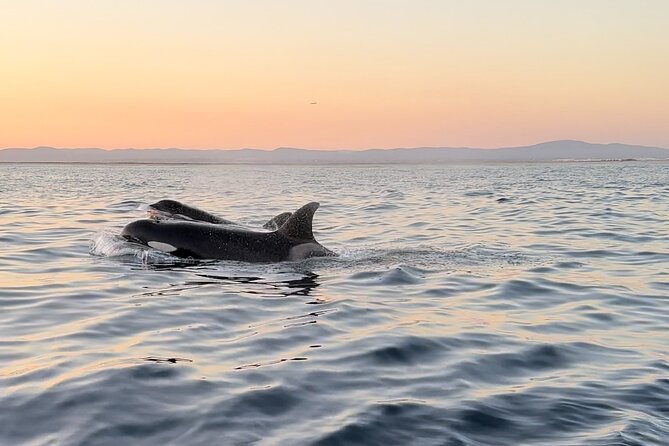
The tour route includes a cruise through Ria Formosa Natural Park before reaching the ocean portion. I like this structure because it slows things down early. You settle in, you hear the briefing, and you start looking while the boat is still in a calmer environment.
Even if the main wildlife action happens after you reach the ocean, this park portion helps you see the broader setting. You’re in a coastal ecosystem, and that context makes the later spotting feel more connected instead of random. Also, it gives the biologists time to get their bearings and start working their search plan.
One practical note: because sunset cruises depend on daylight, you want to arrive ready. If you’re changing clothes, getting your phone charged, or trying to remember where you left your jacket, do it before you step onto the boat.
The Main Hunt: Dolphins, Sharks, and Seabirds at Sunset
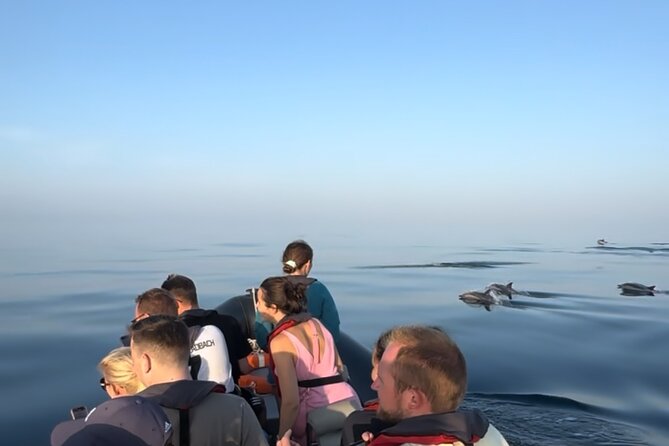
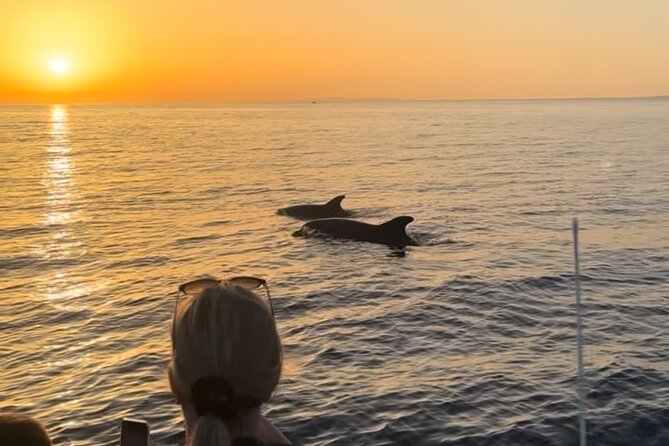
Once you hit the ocean, the marine biologists focus on finding dolphins, whales, and other marine life. The tour description gives you a pretty clear idea of what they commonly spot, which is what I like. No vague promise, just a realistic species list.
The most sighted species on this dolphin trip include:
- Common dolphins
- Bottlenose dolphins
- Striped dolphins
- Sharks and marine birds
That lineup tells you this is not just a one-species “maybe” outing. It’s a broader wildlife search, and that increases your odds of seeing something even if whales are not in the mood that evening.
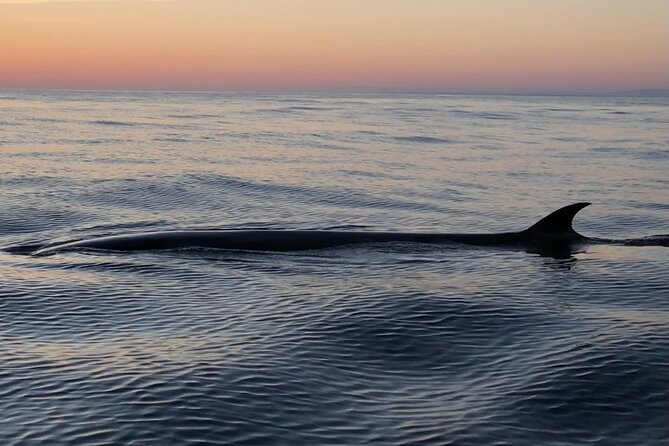
Late winter and spring are called out as the times when bigger cetaceans are more likely, including fin whales and minke whales. If your travel dates line up with those seasons, you should go in with the understanding that the experience can get extra special. If you’re traveling outside that window, you’re still aiming for dolphins and the rest of the marine scene.
Also, sunset changes how you experience these animals. When you see a pod during golden hour, it feels different than seeing the same animal under harsh midday sun. The sky background helps everything read better, including movement and surfacing patterns. If you love photography, this is one of those times when your best shots come from patience, not rapid shutter spam.
Other boats out looking for dolphins:
- Faro: Dolphin and Wildlife Watching in the Atlantic Ocean
★ 4.8 · 637 reviews - Small Group Dolphin and Wildlife Watching Tour in Faro
★ 5.0 · 578 reviews - Dolphin Watching + 2 Islands Tour – From Faro
★ 5.0 · 281 reviews - Faro: Dolphin Watching Boat Tour
★ 4.9 · 217 reviews - From Faro: Dolphin Watching & 2 Islands Tour
★ 4.4 · 73 reviews
What It Means That Marine Biologists Are Gathering Data
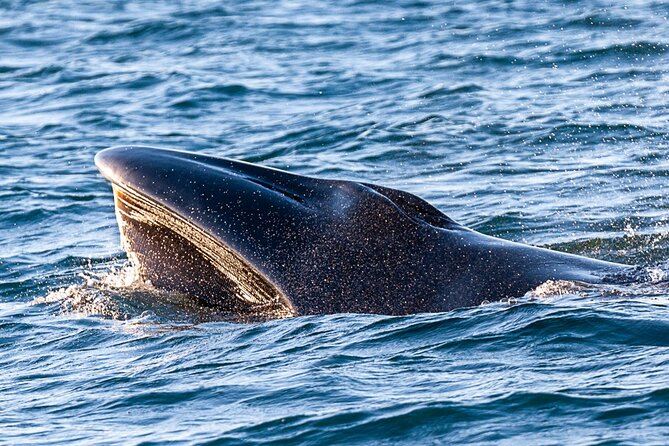
Here’s the part that turns a fun outing into a meaningful one: the marine biologists are gathering scientific data for research while providing an educative approach for participants.
You might wonder what that looks like in practice. You do not need to interpret lab work to benefit. What you notice is the way the biologists talk about sightings, how they point out behavior, and how they keep observations structured. Instead of a crew just saying, There they are, they’re more likely to explain what the animals are doing and why it matters.
That also connects to those repeatedly praised guide traits. When Pedro and Diego are described as attentive and good at helping passengers, it suggests the crew is focused on communication. That’s important on a boat, where sound can be tricky and visibility changes fast.
For you, that means you’re not just chasing a checklist of species. You’re learning enough to understand why a certain surfacing moment is interesting, and why the search continues even when the first sighting is quick.
Included vs Not Included: The Stuff That Keeps You Comfortable
This trip is straightforward on gear. Life jackets are included, which is a big relief.
Not included:
- Wind coats
- Water
So I’d plan like this:
- Bring a wind layer or pack a warm outer layer that you can actually wear on the deck.
- Bring water if you want it. You do not want to rely on finding a drink mid-trip.
- If you get cold easily, treat this like a real sailing forecast issue. Sunset cruise wind can sneak up on you.
One more comfort tip: dress for motion. Even if you’re on a stable boat, your body feels the temperature shift as the sun drops and the air cools.
Private Tour Format: Your Group, Your Pace
This is a private tour/activity, meaning only your group participates. That changes the feel.
In a private setup, the crew can often focus more on your group’s questions and attention level, and you’re less likely to feel like you’re being managed as part of a crowd. For wildlife watching, that can be helpful because the most useful questions tend to come in real time, when you’re seeing a pod or a bird dive.
Because the tour is offered in English, your group should be able to follow the briefing and the explanations without needing translation.
Duration and Timing: How to Plan Your Evening
The duration is about 2 hours 30 minutes. That’s long enough for a real search and enough time for the briefing and the park-to-ocean flow.
Because it’s a sunset activity, timing is everything. The schedule depends on daylight, so plan your day so you’re not rushing across Faro. If you can, build in a buffer for getting to the meeting point and getting settled onboard.
A small data point that also helps planning: on average, this is booked about 9 days in advance. That usually means it’s popular enough that you should not wait until the last minute if you’re traveling in peak weeks.
Who Should Book This Sunset Dolphin Watching
This is a strong match if you want:
- A sunset wildlife outing with a real educational angle
- Marine biologists on board, not just a driver and a megaphone
- A chance at multiple species, including dolphins and sometimes whales depending on season
- A private format so you can ask questions and take the experience at your pace
It’s also a good choice if you care about crew quality. The feedback highlights Pedro and Diego for being knowledgeable in a friendly way, and for taking care of passenger needs. That kind of service matters when you’re dealing with changing light, wind, and the uncertainty that comes with marine wildlife.
If you dislike boat trips, choppy water, or cold evenings on deck, then this may be harder. But the tour requires good weather, and that tends to keep the experience more pleasant.
Should You Book This Dolphin and Whale Watch?
If you want a sunset cruise in Faro that mixes wildlife spotting, marine science, and good guidance, I’d say yes. The standout value is the combination of marine biologists plus the care shown by guides like Pedro and Diego. You’re likely to leave with more than a few photos. You’ll understand what you saw and why it matters.
Book it if your dates line up with late winter or spring and you’re hoping for possible fin whales or minke whales. Book it anyway if you’re mainly chasing dolphins and want the sunset sky as your backdrop. The odds of at least seeing dolphins, plus sharks or seabirds, look solid based on the species focus.
Skip it only if you cannot handle the outdoors for a couple hours in coastal wind, or if you’re unwilling to be flexible due to weather. If poor conditions hit, you’ll have options like another date or a full refund, but the whole point of sunset is that it depends on nature cooperating.
In short: this is the kind of Faro experience that makes the water feel alive, and it does it with enough science and human warmth to make the time worthwhile.
FAQ
What is the duration of the Sunset Dolphin Watching tour?
The tour lasts about 2 hours 30 minutes (approx.).
How much does it cost, and is it in English?
It costs $78.31 per person, and the tour is offered in English.
What’s included and what should I bring?
Life jackets are included. Wind coats and water are not included, so you’ll want to bring your own.
Where do I meet, and where does it end?
You start at Ocean Vibes Algarve Ocean Emotions, Passeio Abu Sào Ibn Harune Loja B, 8000-541 Faro, Portugal, and the activity ends back at the meeting point.
What marine wildlife might I see?
The tour focuses on dolphins and whales, with the most sighted dolphins listed as common dolphins, bottlenose dolphins, and striped dolphins. Sharks and marine birds are also mentioned, and in late winter and spring there may be fin whales and minke whales.
What happens if the weather is poor?
This experience requires good weather. If it’s canceled due to poor weather, you’ll be offered a different date or a full refund. You can cancel up to 24 hours in advance for a full refund.
New along the Algarve coast
- Private transfers between Faro and Carvoeiro★ 5.0 · 1 review
- Transfer From Faro Algarve To Lisbon★ 5.0 · 1 review
- Service from Faro Airport to Praia Da Rocha Portimão★ 5.0 · 1 review
- Faro Olhao and Tavira Tour with Fado Show from Faro★ 3.0 · 1 review
- Faro Ria Formosa Island Tour★ 5.0 · 1 review
- Private Transfer from Faro (FAO) Airport to Praia da Luz★ 5.0 · 1 review
- Faro Private Transfer to/from Lisbon★ 5.0 · 1 review
Algarve Dolphin Watching Tours, compared.

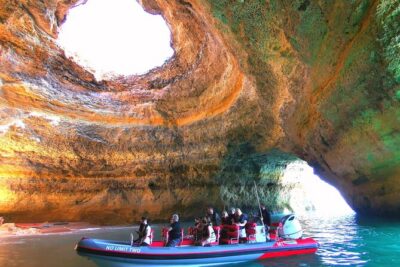
Benagil Caves & Dolphin Watching Speed Boat Tour
Read our review →
Dolphins Search and Benagil Caves from Albufeira
Read our review →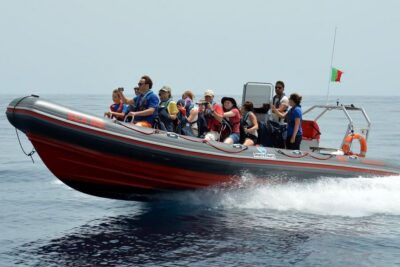
Dolphin Watching and Benagil Cave Boat Cruise
Read our review →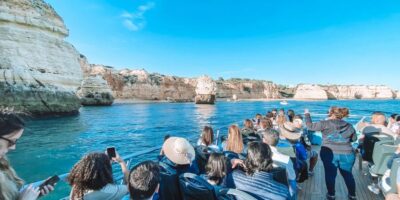
Benagil Caves & Dolphins Watching with Biologist
Read our review →
Combo Dolphin and Benagil Tour with Marine Biologist
Read our review →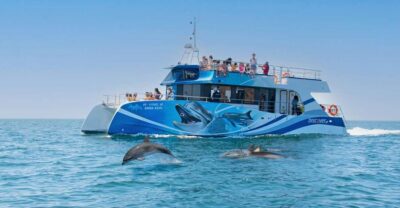
Browse the lists this tour appears in