
Reviewed · WORKSHOPS
Kitesurf Lessons
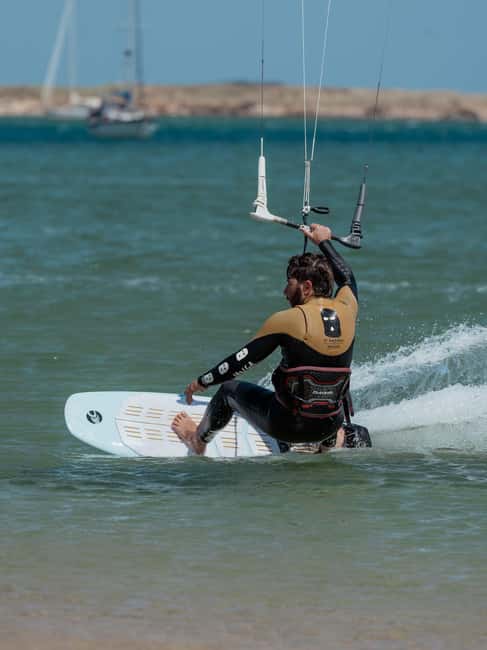
Kitesurfing is taught, not guessed. In the Algarve, you learn kite control with small groups of 4, backed by radio instruction and a rescue boat. The only catch is wind, so you may need to stay flexible if conditions are off.
I like how the coaching is built around getting you to work the safety systems for real, then moving into water skills in order. The progression takes you from beach practice with a 4-line inflatable kite to bodydrag and then your first water starts with the board. One guest highlighted Johnny (sp?) for being patient and encouraging, and she also appreciated that her lesson could be moved when her scheduled day had no wind.
In This Review
- Key Highlights Worth Knowing Before You Go
- Algarve Kitesurf Lessons: a Calm Start With Real Kite Control
- Day 1 on the Beach: Safety Theory, 4-Line Kite Control, and Parrot Mastery
- Day 2 Bodydrag Class: Bigger Kite, Longer Lines, and Learning Water Exit Skills
- Day 2 With a Board Sneak Peek: Escape, Resets, and Staying Calm
- Day 3 Water Start Class: First Board Turns, One-Hand Control, and Self-Recovery
- Day 4 Downwind Driving and Power Control: From Pulling to Steering
- Day 5 Keep Your Ride: Supervised Rentals or More Practice, Plus IKO Recheck
- Equipment and Safety Setup: What’s Included, and Why It Matters
- Price and Value: Why $117 Can Be a Smart Start
- Language Options and Instructor Style You Can Count On
- Who This Course Is Best For
- How to Prepare So Day 1 Feels Easier
- Should You Book This Algarve Kitesurf Lesson?
- FAQ
- Where is the kitesurfing lesson located?
- How much does the experience cost?
- How long is the lesson?
- What equipment is included?
- Are the lessons beginner friendly?
- What skills do you practice in the early days?
- Do you get certification?
- Are instructors available in different languages?
- Is there safety support during the sessions?
Key Highlights Worth Knowing Before You Go
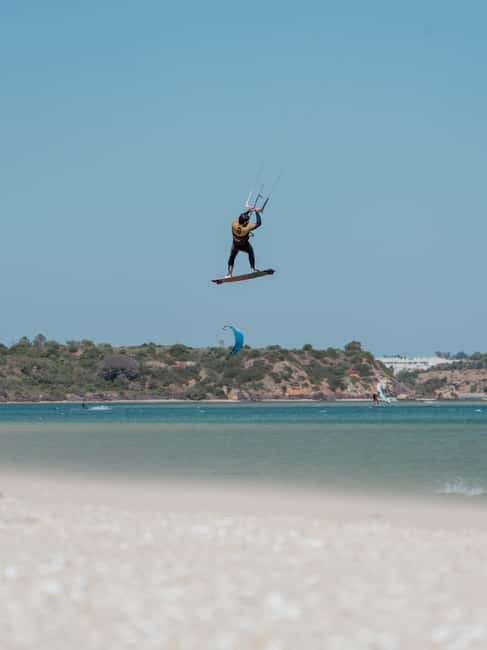
- Small group coaching (max 4) so you get individual feedback instead of vague tips.
- Radio communication during sessions, which helps you correct technique quickly.
- A step-by-step ramp, starting on land, then moving into bodydrag, then water starts.
- Longer lines and bigger kite later, so your control improves before you add the board.
- IKO Level 2 certification, plus reassessment at the end of the program.
- Rescue boat included, so the team can respond fast if anything slips.
Algarve Kitesurf Lessons: a Calm Start With Real Kite Control
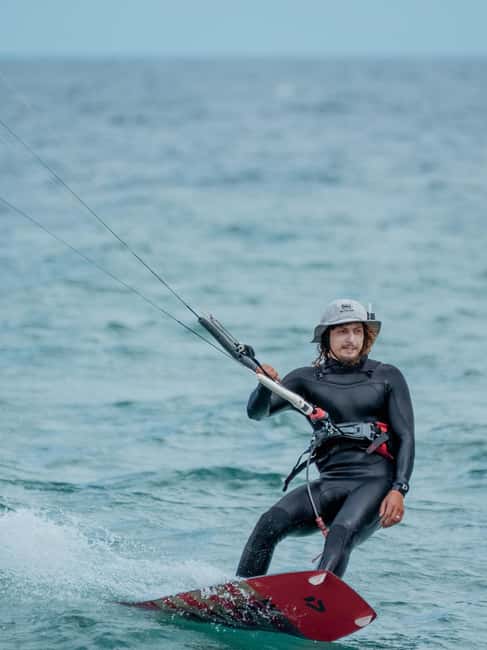
If you’ve ever watched kitesurfers and thought, That looks free and fun, you’ll probably feel the difference once you’re on the beach with your instructor. Here, the point is control first. You’ll learn how to manage wind, handle the kite safely, and avoid relying on luck.
For me, the best value is that the teaching is structured. You don’t jump straight to riding just because you can hold the bar. You work through safety theory, then you prove kite control before you move to the water. And when you do enter the water, the lessons still stay practical, focused on getting in, staying safe, and recovering without panicking.
One more thing: the instructor team is certified and uses professional safety routines, including civil liability and accident insurance. That matters, because confidence on the water comes from knowing you’re being coached with proper systems, not just hype.
More things to make by hand around here:


Day 1 on the Beach: Safety Theory, 4-Line Kite Control, and Parrot Mastery
Day 1 is all about setting a foundation that you’ll keep using for the rest of your learning. You start with beach safety theory and wind awareness, so you understand how to manage kite behavior before you ever feel it pull you.
Then you practice kite control on land with a 4-line inflatable kite. This is a smart starting point because the goal is clean handling: setup basics, security systems, and controlled flying. You’ll focus on parrot control and learn how to demonstrate full command of the kite, including the ability to fly it one-handed while still using the safety systems correctly.
What makes this day valuable is that it’s not just about getting a kite to move. You’ll be trained to think in steps. If you can’t reliably control the kite and use the safety systems, you don’t move forward. That keeps your learning safer and faster later, because you build habits early.
Day 2 Bodydrag Class: Bigger Kite, Longer Lines, and Learning Water Exit Skills
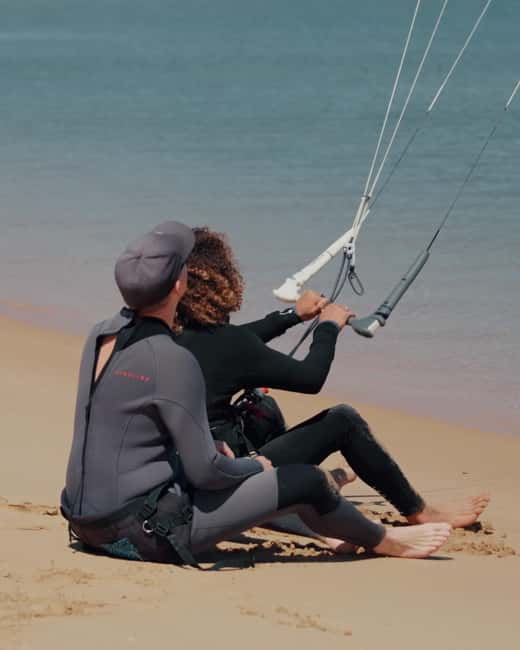
Day 2 is where things become real. You’ll take the kite into the water, still without the board at first, and move to a bigger kite with longer lines. The emphasis is bodydrag, meaning you learn how to move yourself through the water while the kite helps you.
You’ll work on getting into and out of the water while flying the kite. You’ll practice using the kite’s pull strength properly, then doing relaunches from the water. That’s a key skill, because most first-timers don’t struggle only with speed, they struggle with what to do when the kite and body are out of sync.
The lesson also includes one-handed body drag and recovery, so you can regain control and get oriented to continue. If you eventually add the board, these water skills become your safety net. The training team will guide you and keep the session safe, including through the use of a rescue boat.
Day 2 With a Board Sneak Peek: Escape, Resets, and Staying Calm
Even though Day 2 is primarily bodydrag, you may practice with the board too, mainly as a safety and recovery exercise. The focus is not racing. It’s learning how to handle the board if you lose your rhythm or if the kite pulls in a way you didn’t expect.
You’ll also practice rescues in case of an escape, which is exactly what you want early on: not just the best-case scenario, but the reset when things go sideways. It’s hard to overstate how important that is for beginners. When you know how to restart, you stop feeling trapped by mistakes, and that makes you learn quicker.
This is where the radio communication and the instructor supervision matter. The team can guide you mid-move, helping you adjust while you’re actually in the situation, not just after everything is over.
Day 3 Water Start Class: First Board Turns, One-Hand Control, and Self-Recovery
Day 3 is when you add the board and start doing actual water starts. This is the moment your learning shifts from moving with body power plus kite pull into controlling both the kite and the board together.
Once you’re confident in handling the kite and entering the water, you use the kite with one hand, put on the board, and take your first turns. You’ll keep going even if you fall, because falls are part of learning. The difference here is that you learn how to drag your body back onto the board and start again.
Your instructor stays with you during early attempts, with an emphasis on walking safely and independently. You’re not just trying random moves. You’re practicing the sequence that gets you to repeatable control.
And at the end of the Day 3 process, you receive IKO Level 2 certification. That’s a meaningful milestone because it signals you’re ready for further instruction, especially upwind riding lessons, or supervised rentals if you’re planning to keep learning on your own.
Another way to take the same stretch of coast:
- Lagos: Combo Dolphin and Benagil Tour with Marine Biologist
★ 4.7 · 2,352 reviews - Lagos: Ponta da Piedade Rock Formations Guided Boat Tour
★ 4.9 · 2,290 reviews - From Lagos: Boat Cruise to Benagil
★ 4.8 · 909 reviews - Lagos Grotto Trip in Different Languages
★ 4.7 · 296 reviews - Lagos: Sunset Sail aboard a Traditional Boat with Prosecco
★ 4.7 · 286 reviews
Day 4 Downwind Driving and Power Control: From Pulling to Steering
By Day 4, you’re no longer only learning to get going. You start controlling speed and power using kite and board skills. That’s the difference between surviving in the water and starting to ride with purpose.
You’ll keep practicing water starts while learning to manage kite power more deliberately. This is where you learn to read what the kite is doing, then match your inputs so the pull feels controlled instead of random. You also begin to work with downwind driving, which helps you understand direction and timing.
There’s also a chance to introduce the fundamentals of upwind riding, depending on how you’re progressing. Even if you’re not fully upwind yet, having that first exposure to the concept helps you understand where your next practice sessions should go.
Day 5 Keep Your Ride: Supervised Rentals or More Practice, Plus IKO Recheck
Day 5 is about independence. If your instructor feels you’re ready, Kite45 offers supervised rentals so you can keep building skill outside the structured class flow. If you’re not quite there yet, you continue practicing the core skills from earlier days until you feel confident.
This day also includes an IKO level reassessment. That means they don’t just hand you a sticker and send you off. They check your progress and confirm readiness based on real ability, which is exactly what you want when you’re learning something that’s wind-dependent and physically demanding.
Either way, your goal by the end of the final session is the same: you should know how to ride with better control, recover when you make mistakes, and understand what comes next. If you plan to progress toward upwind riding, this day gives you a clearer path.
Equipment and Safety Setup: What’s Included, and Why It Matters
You get complete equipment: neoprene, harness, vest, helmet, kite, bar, and board. That’s big for value, because early kitesurfing can get expensive fast if you’re renting or buying everything separately.
It also reduces the biggest beginner headache: not knowing whether gear fits right. The instructor team can help ensure you’re set up correctly for your height and learning stage. And because the training relies on safety systems and kite control, proper equipment setup is not a detail. It’s the whole game.
Safety is reinforced in multiple ways. You’ll have specialized, VDWS and IKO certified instructors. You get radio communication for accurate and effective instruction, and there’s a rescue boat during sessions. Plus, civil liability and accident insurance is included, which is a professional standard you should expect when learning on the water.
Also, the activity includes transport to the beach. That matters when you’re doing multiple days or when wind timing changes. You don’t waste time with logistics before your session even starts.
Price and Value: Why $117 Can Be a Smart Start
At $117 per person for a 3-hour coaching block, this price can feel reasonable only if the instruction is actually effective. Here, the curriculum is built for skill progression, not just “try it once” vibes.
You’re paying for more than time on the water. You’re paying for:
- structured safety teaching,
- supervised kite control practice (including one-handed flying),
- bodydrag and relaunch technique from the water,
- water starts with recovery habits if you fall,
- and end-of-course IKO Level 2 certification plus reassessment.
You’re also paying for small-group attention, with a limit of 4 participants. That’s what makes coaching actually stick. If you’ve learned anything from other adventure sports, you know the difference between repeating mistakes alone and getting corrected while you’re in the middle of it.
In short, the value is in the pathway. If you want to learn the right basics quickly and safely, this kind of coaching structure earns its keep.
Language Options and Instructor Style You Can Count On
The instructors can teach in English, French, German, Spanish, Italian, Dutch, and Portuguese. If you’re traveling in Europe and you want your instructions clear, this kind of language coverage helps you move through the steps without missing key safety details.
One review specifically praised Johnny (sp?) for being very patient and encouraging. That’s not fluff. Patience is a big deal in kitesurfing, because the early stages can feel awkward fast. When an instructor stays calm, the learning curve feels manageable, and you keep practicing instead of getting discouraged.
Also, the same guest appreciated flexibility to move the lesson when wind was not available on the original day. With kitesurfing, this is a real-world factor. The best course experience is the one where the provider helps you adapt to conditions rather than forcing you through something unsafe or ineffective.
Who This Course Is Best For
This is a strong fit if you:
- are a complete beginner or close to it,
- want a safety-first approach with real technique coaching,
- learn best through step-by-step progression (beach control to water to board),
- and want a clear certification endpoint with IKO Level 2.
It’s also a good match if you’re traveling as a couple or solo but still want small-group attention. The max 4-person limit means you’re unlikely to feel lost.
If you already have solid kite control and water relaunch experience, you might move quickly through some basics. Still, the certification and structured check-ins can be useful if you want reassurance that your foundations are correct.
How to Prepare So Day 1 Feels Easier
Because the first day is heavy on safety theory and beach kite control, give yourself a mindset of learning, not performance. You’ll get farther faster if you focus on understanding how the kite responds to the bar and wind rather than trying to rush the outcome.
Wear gear that works comfortably under the neoprene you’ll be given. Plan for getting wet, because bodydrag and water starts are exactly that, wet practice with repeated attempts.
Most importantly, treat the wind as part of the schedule. If the day you book runs into low-wind conditions, you may need to reschedule. That’s not a failure. It’s how kitesurfing learning stays safe and productive.
Should You Book This Algarve Kitesurf Lesson?
If you want a beginner course that builds confidence through control, safety systems, and real water skills, I’d book it. The small group size, radio-based coaching, rescue boat coverage, and full equipment package all point to a provider that takes training seriously.
Book it especially if certification matters to you, because you’ll work toward IKO Level 2 and then get reassessed. That structure is comforting when you’re new and you want proof you’re ready to keep going.
The one reason to pause is wind dependency. If your travel schedule is ultra rigid, you might feel stressed when conditions change. But if you can stay flexible, this course is a practical, high-value way to start kitesurfing in the Algarve and move through the early steps the right way.
FAQ
Where is the kitesurfing lesson located?
The lessons are in the Algarve, Portugal.
How much does the experience cost?
It costs $117 per person.
How long is the lesson?
The duration is 3 hours per session, based on the listed experience length.
What equipment is included?
You get complete equipment: neoprene, harness, vest, helmet, kite, bar, and board.
Are the lessons beginner friendly?
Yes. The program starts with beach safety theory and kite control, then moves into bodydrag and later water starts with the board.
What skills do you practice in the early days?
You learn beach kite control with a 4-line inflatable kite, then bodydrag in the water, and later water starts using the board. You also work on one-handed control and recovery skills.
Do you get certification?
Yes. You receive IKO Level 2 certification, and there is also an IKO level reassessment at the end.
Are instructors available in different languages?
Yes. Instruction is available in English, French, German, Spanish, Italian, Dutch, and Portuguese.
Is there safety support during the sessions?
Yes. You’ll have radio communication for instruction and a rescue boat during sessions, and the instructors are VDWS and IKO certified. Civil liability and accident insurance are included as well.
New along the Algarve coast
- Lagos: Mindful Date Night: CacaoCeremony, Sauna & Ice Bath★ 5.0 · 1 review
- Lagos: Beneteau Oceanis 40.1 Private Sailing Experience★ 5.0 · 1 review
- Lagos: Afternoon Luxury Boat Cruise★ 5.0 · 1 review
- Lagos: Sunrise or Sunset Yoga and Cacao Ceremony★ 1.0 · 1 review
- Lagos: 2 Dives on the local Reefs (FOR CERTEFID DIVERS ONLY)★ 5.0 · 1 review
- Lagos: Coastal E-Bike Tour with Guide★ 5.0 · 1 review
- Portuguese Cooking Class: Algarve’s Pork & Seafood Cataplana★ 5.0 · 1 review
Workshops, compared.
Beginner Surf Lesson at the Beautiful Algarvian West Coast
Read our review →

Browse the lists this tour appears in