
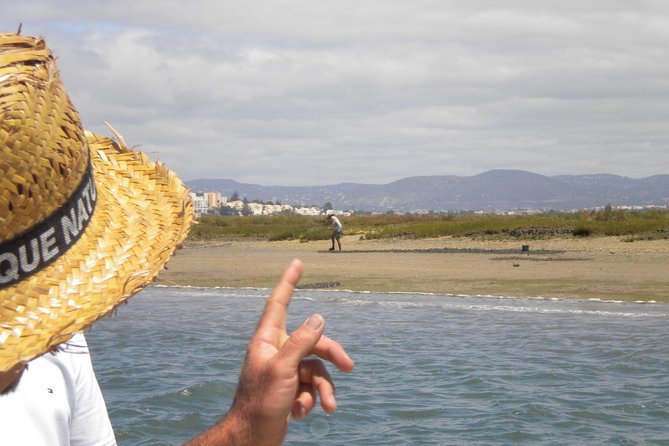
Reviewed · RIA FORMOSA TOURS
2-hour Bird Watching Guided Boat Trip in Ria Formosa from Faro Algarve
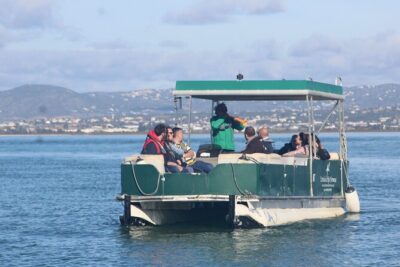
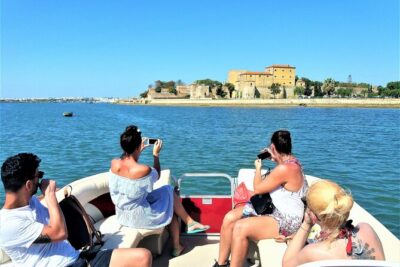
Ria Formosa is bird country, and this boat trip is the shortcut. You board a comfortable pontoon boat with a local guide and get live commentary plus binoculars and a bird ID guide, so you can actually read the wetlands as you go. I also like the built-in stop at a small, quieter beach area, which makes the 2 hours feel like more than a quick spin. One thing to plan for, species sightings can shift with season and tide, so nobody should treat any one bird as guaranteed.
If you want an easy outdoor outing that feels both calm and rewarding, this is a strong pick. It is family-friendly, runs in a small group (up to 11), and the route focuses on places birds use every day, not just far-off views. The one potential downside is that in rougher conditions or off-season, the number of birds you spot may be lower, even when the guide is doing a great job.
In This Review
- Key highlights to expect on this Faro to Ria Formosa boat trip
- Ria Formosa bird watching from Faro: why 2 hours hits the sweet spot
- Meeting at Pure Nature Store and boarding the pontoon boat
- The lagoon bird checklist: storks, egrets, spoonbills, plus winter waders
- Oyster and clam farms: the Algarve’s working coastline and the birds that follow
- Barrinha Beach stop for breeding birds: Little Tern and Kentish Plover
- Faro old-town views to end: how the route makes the return feel worthwhile
- Price and value: what $48.27 buys you in real time
- Tips to get more birds during your 2 hours (without stressing out)
- Should you book this Faro Ria Formosa bird boat trip?
- FAQ
- How long is the bird watching guided boat trip in Ria Formosa from Faro?
- What is included with the tour?
- Do I get a beach stop during the tour?
- Is the tour offered in English?
- What birds might I see during the trip?
- How big is the group?
- What if the weather is bad?
Key highlights to expect on this Faro to Ria Formosa boat trip
- Small-group birding on a pontoon boat, maximum 11 people
- Binoculars and a bird identification guide included for real spotting
- Frequent wetland species such as white stork, little egret, and spoonbill
- Oyster and clam farms plus the “why birds show up” food story
- Barrinha Beach stop (15 to 20 minutes) tied to breeding areas
- Old-town Faro views to close the experience
Ria Formosa bird watching from Faro: why 2 hours hits the sweet spot
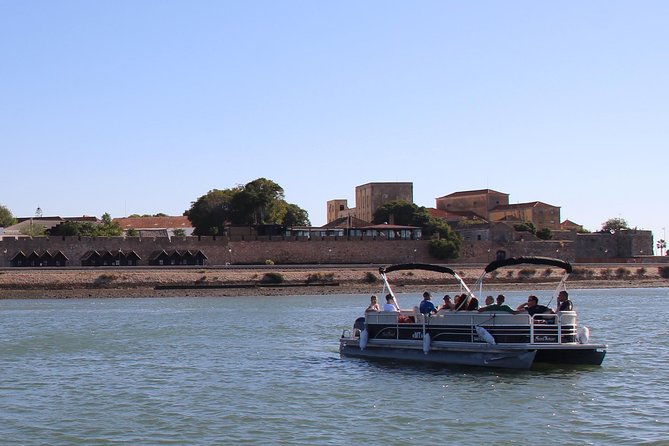
Ria Formosa is one of Portugal’s key wetland systems, and it is famous for aquatic birds. A 2-hour guided boat format makes sense here because birds are active in short bursts, and the guide can reposition quickly as conditions change. You are not stuck for half a day with nothing happening.
I like that this trip is not only “look, birds,” it is also “understand what you are seeing.” You get a mix of bird identification and practical context about the lagoon and how the ecosystem works. Even if you are not a hardcore birder, you come away feeling like you can tell a few species apart and know what to look for next time.
For families, two hours is the magic number. The pacing is structured, there is a beach stop for a quick reset, and the small group size keeps it manageable for kids.
More time in the Ria Formosa lagoon:
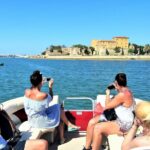
Meeting at Pure Nature Store and boarding the pontoon boat
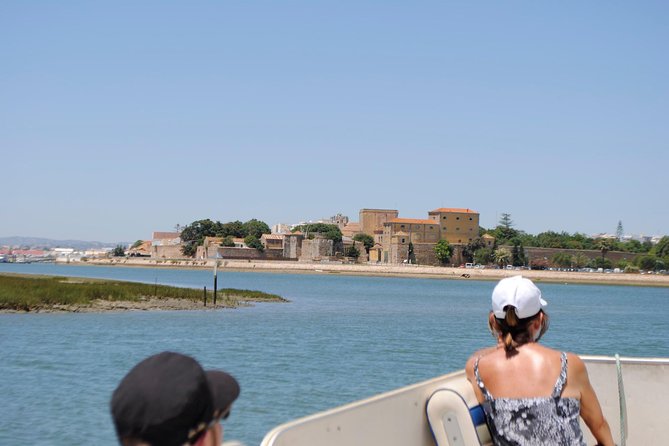
You meet at Formosamar, at the offices in the Pure Nature Store building, on the ground floor. The location is inside the Ginásio Clube Naval de Faro area, the Nautical Club of Faro. Plan to arrive early and check in at least 10 minutes before departure, since the group boards together.
From there, you board a comfortable pontoon boat. Life vests are provided, so you can focus on watching rather than second-guessing gear. The setup also matters for families and mixed-age groups, because pontoon boats tend to feel stable for short sightseeing trips.
One practical tip: use that first stretch of the ride to get your bearings. Once you know where the guide is scanning, you will catch more of the small, easy-to-miss action, like waders feeding near the shallows.
The lagoon bird checklist: storks, egrets, spoonbills, plus winter waders
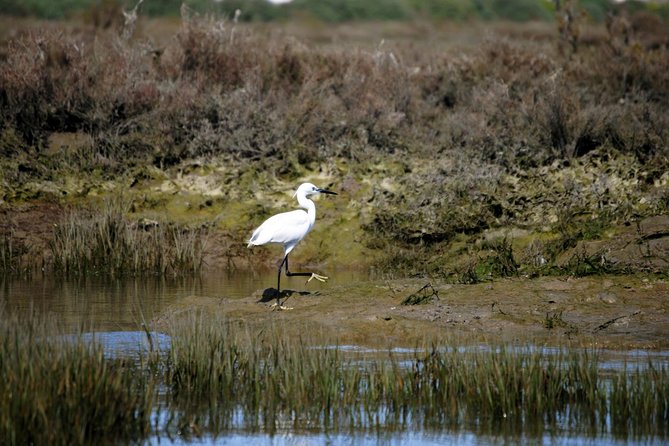
This is a bird-focused route through the wetland areas of Ria Formosa, with a guide pointing out what birds are doing right now. During the tour, you can observe species such as white stork, little egret, and spoonbill. Those are excellent “core birds” because they are tied to shallow feeding areas you can often spot from the boat.
Waders are the big theme, especially in winter. The tour route is designed for those constant visitors, and you might see birds like whimbrel, turnstone, and grey plover as part of the regular mix. Even when you do not get every species listed, the process stays rewarding because you are learning how the lagoon changes what shows up.
Based on past trips, the “wow” moments can happen at different times. Some journeys end with a surge of activity, like seeing a group of flamingos later in the route, rather than right at the start. So stay patient and keep your eyes moving, especially during stop-and-scan moments.
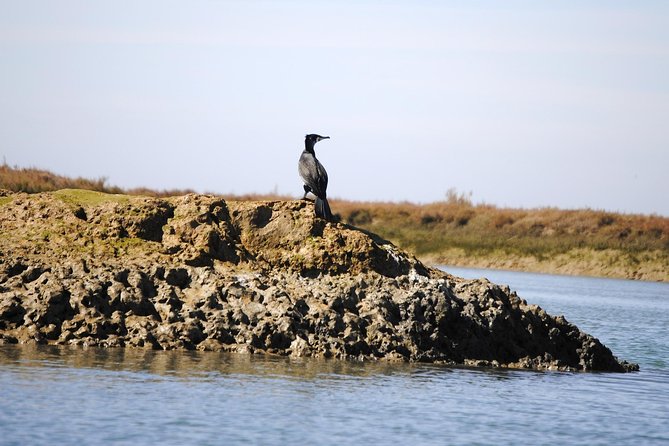
Also, do not ignore the smaller details. Cormorants, terns, and other shorebirds often show up as “support cast,” and once your guide points them out, you start seeing them everywhere.
Oyster and clam farms: the Algarve’s working coastline and the birds that follow
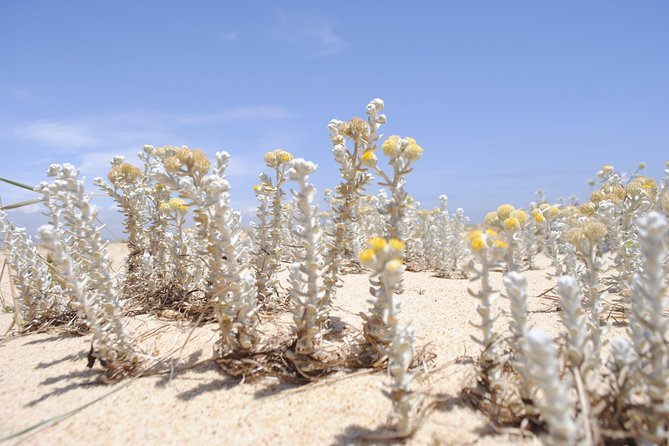
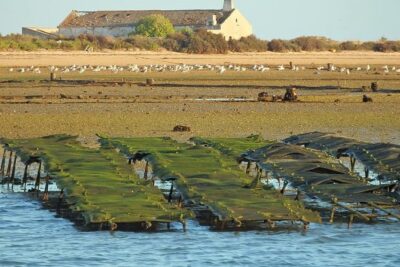
A big part of the Ria Formosa story is that people work the wetlands too. The trip continues through areas with oyster and clam farms, so you get more than wildlife spotting. You also get a clear link between the economic activity and the food chain that attracts birds.
You may see oyster beds and clam farms as the boat moves toward the islands of the natural park. This is one of those moments where the wetland feels alive in a real, local way. It is not a fenced-off nature exhibit, it is a working ecosystem.
This matters for your expectations. Birds are not random decorations. They show up where food and habitat overlap, and farmed areas can shape where birds feed. When the guide explains what you are looking at, it turns a pretty view into a place with logic.
If you are the type who asks why birds are doing something, you will likely enjoy the guided commentary. Past guides on this route have explained migration patterns, bird habits, and even answered lots of questions patiently, which makes the trip feel like a classroom that floats.
Barrinha Beach stop for breeding birds: Little Tern and Kentish Plover
Around the point where the lagoon meets the sea, you make a stop at Barrinha Beach. This break runs about 15 to 20 minutes and gives you a chance to step out, enjoy the small stretch of sand, and take photos.
Barrinha Beach is described as an important reproduction area for the little tern and the Kentish plover. In wintertime, that same area can offer sightings like the Sandwich tern and the greater flamingo. The key practical thing: species lists can shift by season, and the operator cannot fully guarantee specific birds because everything is in their natural habitat.
So what should you do with that 15 to 20 minutes? Bring your attention back to the shoreline edges and shallow feeding zones. Birds tied to breeding sites often follow predictable patterns, but the timing can still be tricky. This is exactly where binoculars and the bird ID guide come in handy, because you can start matching silhouettes and behaviors fast.
If you are traveling with kids, this is also the stop that breaks up the boat time. It is long enough to stretch legs, but short enough that the overall pace stays easy.
Other days out from Faro:
- From Faro: The Original Benagil Cave, Marinha & More Tour
★ 4.7 · 2,655 reviews - 2 Stop | 2 Islands & Ria Formosa Natural Park – From Faro
★ 5.0 · 1,045 reviews - Faro: Deserta Island and Farol Island Catamaran Boat Trip
★ 4.6 · 955 reviews - From Faro: Benagil, Marinha, 7 Valleys, Algar Seco Adventure
★ 5.0 · 917 reviews - From Faro: Benagil, Algar Seco, 7 Hanging Valleys, & Marinha
★ 4.9 · 890 reviews
Faro old-town views to end: how the route makes the return feel worthwhile
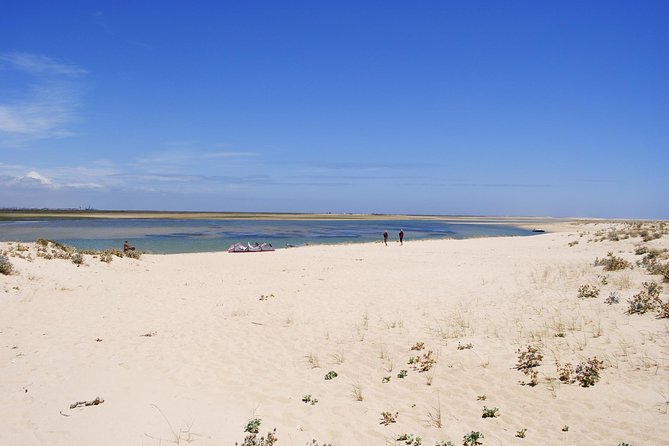
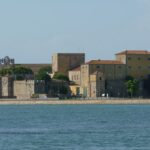
The tour finishes with stunning views of the old town of Faro. You are basically closing with the best kind of contrast: quiet lagoon life followed by a city you can recognize and plan around.
You can choose to disembark back at the end point, and there is an option to disembark where you prefer if you ask your skipper in advance. That flexibility is useful if you are mapping the rest of your day after the boat ride.
This ending also helps families and first-time nature visitors. You get the payoff view without needing another activity to “wrap up” the trip. It is a clean, simple arc.
Price and value: what $48.27 buys you in real time
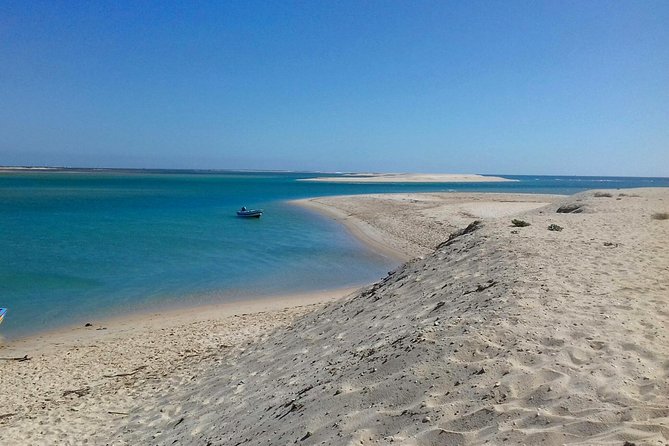
At $48.27 per person for about 2 hours, the value comes from the materials and the format. You get live commentary on board, a local guide, binoculars, and a bird identification guide. You also get a real stop on a deserted beach, not just passing shots from the water.
The small-group cap, maximum 11, makes a difference too. It is easier for the guide to spot birds and point them out when everyone is within a manageable viewing area. That is especially important for birding, because missing one “tiny movement” can mean missing a species.
Comfort is also part of value. Past experiences mention a comfortable boat and enough space for relaxed seating, including trips where older family members felt it was accessible. A single note did mention the boat could use some attention, so it is worth understanding that conditions can vary by departure, but the overall pattern is comfort and practicality.
Finally, if you are visiting in a shoulder season, the guide’s job becomes expectation management. One captain was openly honest that it might not be the best time for huge numbers of birds, yet still found birds and shared plenty of context. That kind of candor helps you feel like your money went into the experience, not into false promises.
Tips to get more birds during your 2 hours (without stressing out)
Birding success here depends on timing. You cannot control tide or season, but you can control your attitude and habits.
- Arrive checked in on time, so you start scanning early.
- When the guide points something out, stop looking for the next thing. Give your eyes 30 seconds on the spot.
- Use binoculars constantly, not only at the end. Shorebirds can be easy to miss at first glance.
- If you are traveling in winter, expect waders to dominate, and focus on shoreline feeding behavior.
- If you are hoping for flamingos or a bigger moment, know that conditions can help the boat get closer to places where flamingos feed.
Some previous trips also benefited from tide conditions that made it easier to approach salt pans and see flamingos. That does not mean you will get the same exact sightings, but it explains why some days feel better than others.
Should you book this Faro Ria Formosa bird boat trip?
Book it if you want a calm, structured way to see Ria Formosa wildlife without turning it into a full-day project. The combination of small group size, included binoculars and bird ID guide, and a guided route focused on real wetland habitat makes it a smart use of time in the Algarve.
Skip it if you need guaranteed species, because the operator cannot promise specific birds and the counts can shift with season and tide. Also, if you dislike being on water, no boat tour is truly risk-free, even with life vests and a comfortable boat.
My take: this is one of the better “value-to-effort” nature outings from Faro. You leave with better bird-spotting instincts, not just photos.
FAQ
How long is the bird watching guided boat trip in Ria Formosa from Faro?
The trip runs for about 2 hours.
What is included with the tour?
You get a 2-hour guided boat trip with a stop on a deserted beach, binoculars and a bird identification guide, life vests, a local guide with live commentary on board.
Do I get a beach stop during the tour?
Yes. There is a stop at Barrinha Beach for about 15 to 20 minutes.
Is the tour offered in English?
Yes, English is listed as one of the offered languages.
What birds might I see during the trip?
Common possibilities include white stork, little egret, spoonbill, and winter waders. The species you see can vary by time of year.
How big is the group?
There is a maximum of 11 travelers per booking.
What if the weather is bad?
The experience requires good weather. If it is canceled due to poor weather, you will be offered a different date or a full refund.
Hulls Leaving the Algarve Marinas
- From Faro: Catamaran Boat Trip to Deserta Island with Stop
★ 4.6 · 636 reviews - Faro: Eco-Friendly Ria Formosa Bird Watching in Solar Boat
★ 4.7 · 359 reviews - Faro: Ria Formosa Lagoon Small Boat Tour with Local Guide
★ 4.4 · 336 reviews - From Faro: Ria Formosa Sunset Boat Trip
★ 4.8 · 326 reviews
New along the Algarve coast
- Private transfers between Faro and Carvoeiro★ 5.0 · 1 review
- Transfer From Faro Algarve To Lisbon★ 5.0 · 1 review
- Service from Faro Airport to Praia Da Rocha Portimão★ 5.0 · 1 review
- Faro Olhao and Tavira Tour with Fado Show from Faro★ 3.0 · 1 review
- Faro Ria Formosa Island Tour★ 5.0 · 1 review
- Private Transfer from Faro (FAO) Airport to Praia da Luz★ 5.0 · 1 review
- Faro Private Transfer to/from Lisbon★ 5.0 · 1 review
Ria Formosa Tours, compared.
4 Stops | 3 Islands & Ria Formosa Natural Park – From Faro
Read our review →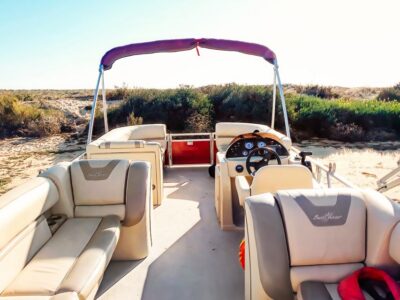
Ria Formosa – Boat trip to the 3 Islands: Armona | Culatra Island | Lighthouse
Read our review →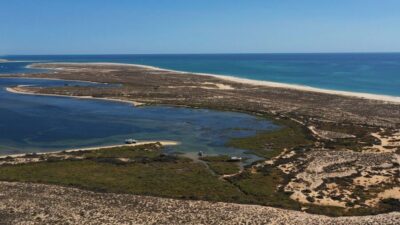
Ria Formosa Natural Park and Islands Boat Cruise from Faro
Read our review →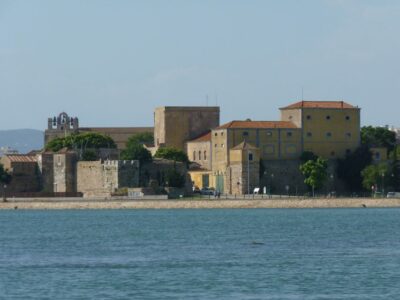
4 Stops, 3 Islands in Ria Formosa Catamaran Tour
Read our review →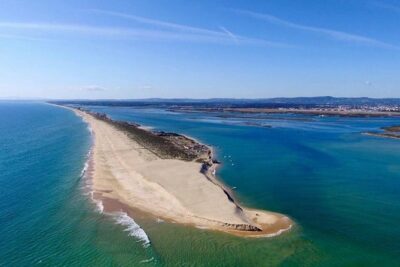
2 Stop | 2 Islands & Ria Formosa Natural Park – From Faro
Read our review →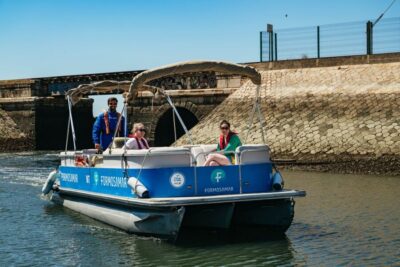
Deserta Island and Farol Island Catamaran Boat Trip
Read our review →Browse the lists this tour appears in